
Riftbound Rules, Errata, and Banned Cards: The Living Reference
Understand which official document controls, what major updates changed, and how to verify current errata and format bans before playing.
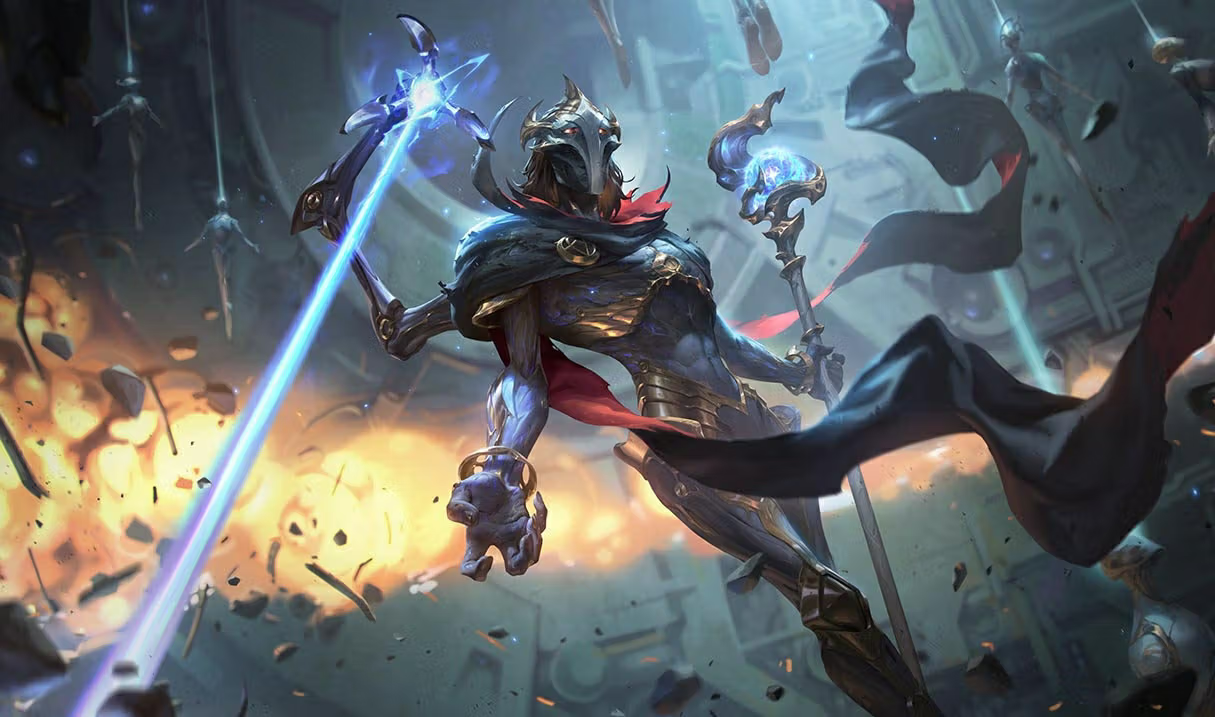
Riftbound rules content changes over time. A patch-note article can explain why a rule changed, but it should never outrank the current Core Rules, Tournament Rules, errata file, or ban list. Use this page to find the right source and understand the major changes that shaped play through Vendetta.
Official facts below describe Riot's published documents. Riftarc analysis explains why a player should care. If the two ever appear to conflict, the current official Rules Hub wins.
Which document answers which question?
- Core Rules: how cards, turns, combat, costs, tokens, and keywords work.
- Tournament Rules: communication, deck registration, match procedure, judge policy, penalties, and event operations.
- Rules FAQ and clarifications: interactions that need examples or an interim ruling.
- Errata: corrected card text. The current text applies even when the physical printing says something older.
- Ban lists: cards and battlefields that cannot be used in a named constructed format.
Riot launched a central Rules Hub in July 2026 to make these documents easier to find. Bookmark that page, not an individual old PDF.
The major set-rule updates
Spiritforged added rules support for its expansion mechanics and clarified intentional numbering gaps. Its FAQ and errata addressed Origins carry-over questions, repeated damage, playing or attaching cards from the deck, combat wins, tokens, Might reduction, and copy effects. Most changes clarified operation rather than rebalancing cards.
Unleashed introduced XP, Hunt, Level, a new action symbol, dependent keywords, and broad clarifications for combat, cleanup, and replacement effects. Later FAQ and errata work refined triggered abilities, Showdowns, battlefield control, private information, token creation, equipment, movement, and specific cards.
Vendetta's Core Rules patch introduced Empower, Flow, Burn, and Skip. It also revised token handling, costs, triggers, combat-damage replacement effects, battlefield reuse in longer matches, and many edge cases. Subsequent errata adjusted wording and timing across Spiritforged, Unleashed, and Vendetta cards, including printed corrections identified during preview season.
Riftarc's read is simple: set mechanics are the headline, but the quiet timing and replacement-effect changes are more likely to decide a difficult match. Read the current text of any card that has an errata marker before registering it.
Tournament-policy changes worth remembering
Tournament Rules changed repeatedly in 2026. March added clearer judge guidance for rewinds, changed decisions, warnings, rules questions, and recycled cards. April clarified 2v2 information sharing, drawn games, casual preconstructed decks containing banned cards, and penalty wording. July raised the constructed sideboard maximum from eight to ten, tightened acknowledgement of triggers and public information, formalized tracking of XP and floating resources, and introduced a disciplinary framework aligned with Riot's other games.
These are historical milestones, not a substitute for the latest document. An organizer may also publish event-specific procedures.
Constructed bans and the separate 2v2 list
Riot's first Standard Constructed bans took effect on March 31, 2026. The announcement removed Called Shot, Draven, Vanquisher, Fight or Flight, Scrapheap, The Dreaming Tree, Obelisk of Power, and Reaver's Row. Riot's stated concerns included repetitive Miracle patterns, Draven's performance, and battlefields that constrained choices.
The July update added Stealthy Pursuer, The Arena's Greatest, and Aspirant's Climb to Standard and created a separate Constructed 2v2 list that included Master Yi, Wuju Bladesman. Stealthy Pursuer was announced early because the expanded domain combinations enabled an infinite interaction.
Do not copy those lists into a deck check months later. Open the current official ban-list document and verify the format named on your event registration.
A five-minute pre-event rules check
- Open the Rules Hub and confirm document dates.
- Check every registered printing that carries known errata.
- Verify the ban list for Standard, 2v2, or the event's actual format.
- Confirm sideboard and deck-registration limits in the current Tournament Rules.
- Ask the head judge about an unresolved interaction before round one.
For gameplay fundamentals, use How to Play Riftbound. For practical event preparation, use Your First Riftbound Tournament.
Bottom line
Rules articles age; source hierarchy does not. Start with the Rules Hub, treat errata as the card's real text, match bans to the correct format, and use historical patch notes only to understand how the current rule arrived.