Riftbound: Vendetta Complete Set Guide
Vendetta products, rivalry theme, enemy-domain Legends, Pre-Rift, Empower, Flow, Burn, Skip, rewards, and printed-card corrections.

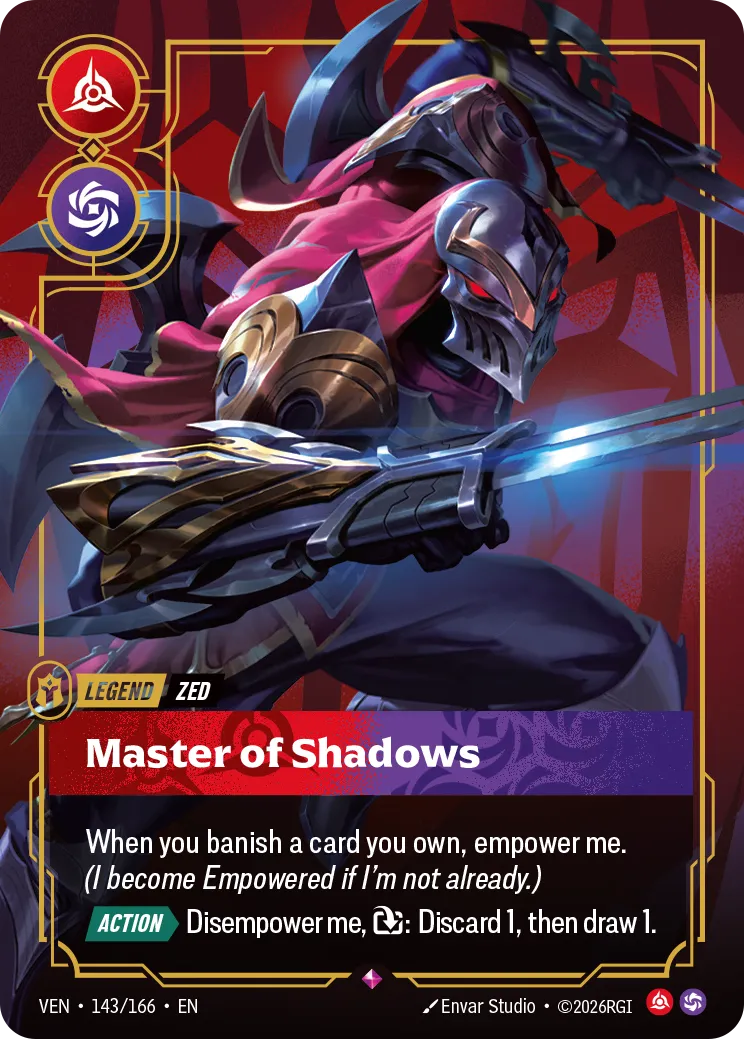
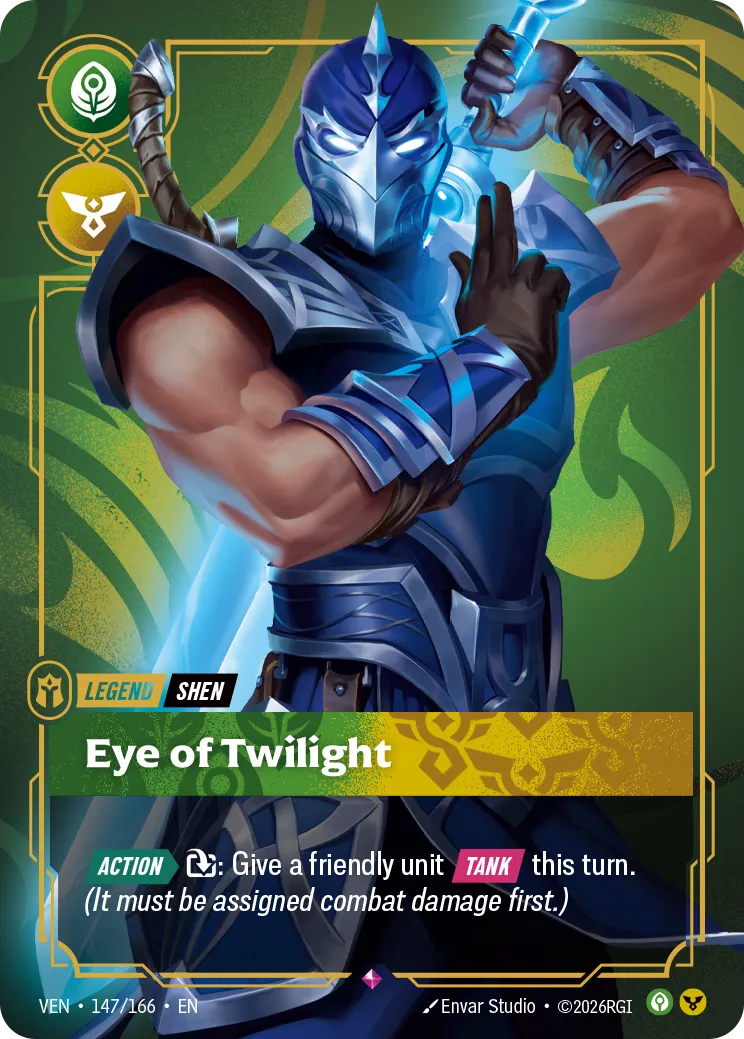
Vendetta is Riftbound's fourth set, built around rivalry and enemy-domain pairings. It launched July 31, 2026 in English and Chinese with a smaller 166-card base set, a Shen-versus-Zed Showdown Deck, boosters, a returning Vault, and Pre-Rift kits.
This guide keeps product and gameplay information together. The separate Vendetta Legends guide compares all nine rivals; the living rules reference holds current wording.
Official mechanics
- Empower gives a unit the Empowered status for the specified effect and duration defined by the current rules.
- Flow allows qualifying spells to be played from trash using an alternate cost.
- Burn moves cards from the top of a deck to trash.
- Skip creates effects that bypass a named action or opportunity.
Riot's Core Rules patch also changed supporting systems for costs, triggers, tokens, replacement effects, and battlefield reuse. Learn the headline keywords here, then verify edge cases in the Rules Hub.
Products and who they serve
The Shen vs. Zed Showdown Deck is the set's most direct ready-to-play product and was initially distributed through a merch drawing. That drawing is over; current availability must be checked with Riot or a retailer. Booster displays and individual packs serve Limited and collecting, while the Vault and Pre-Rift kit package cards with storage or event materials.
Pre-Rift events let players open Vendetta on site and build a casual Sealed deck without bringing constructed cards. The event week began July 24 and used an exclusive Riven, Shattered promo while supplies lasted. For future Pre-Rifts, the useful advice is to prioritize a playable curve, removal with broad targets, and a Legend whose prebuild already functions before booster upgrades.
Rival Legends and early deckbuilding
Vendetta's enemy-domain Legends are deliberately synergistic, but early results showed that synergy alone was not enough. Kennen and Nasus translated most clearly into larger-event potential. Mel and Akali produced promising finishes, while several rivals needed more refinement or favorable pools.
Riftarc's central recommendation is to test the prebuild's weakest turn. Shen, Jayce, and Nasus looked strong out of the box; Zed, Kennen, and Akali often wanted booster support. If a kit cannot contest the first relevant battlefield or recover after one removal spell, upgrade that failure point before adding a flashy finisher.
Rewards, skins, and corrections
Vendetta brought six Crystal Rose alternate-art cards based on Wild Rift skins into ordinary booster distribution at the same rate as other Alternate Art cards. Separate event participation rewards linked Vendetta Pre-Rift and Summoner Skirmish activity to Wild Rift codes; those event windows and eligibility rules are historical, not standing benefits.
Riot also corrected preview and printed-card issues. Incomplete Renekton preview art did not reach print, while Gangplank and Illaoi cards required errata or tag fixes. Always compare a questionable printing with the current errata rather than an old gallery image.
Collectibility
Vendetta's 31 Overnumbered cards include nine signed Legend variants and 22 connecting-art Rival cards. Nexus Nights used a 25-card promo pool. These treatments are covered in the collector guide; neither premium treatment changes tournament legality.
Final assessment
Vendetta is a set about paired identities, but its best cards still need to function in real battlefield turns. Use the official mechanics as constraints, the rival theme as a deckbuilding invitation, and early results as evidence—not a verdict. The first-three-weeks metagame report shows how that distinction played out.
Vendetta cards, rivals, and product highlights
Explore the verified catalogue cards referenced by the source articles and analysis above.